



APRS • VHF • iGate / Digipeater
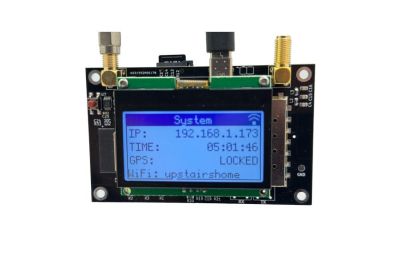
CSN iGateMini: A self-contained VHF APRS device that helps fill the “dead zones”
If you’ve ever looked back at an APRS track and noticed missing chunks—especially on rural routes—you’ve seen the effect of coverage gaps. APRS position beacons can only make it onto the internet when they’re heard by a nearby iGate or digipeater and then forwarded into APRS-IS. Traditionally, that means dedicating a VHF rig plus a computer (and the usual cabling, audio levels, and software setup).
The CSN iGateMini takes a different approach: it combines the essential pieces into a single, compact device designed to operate on VHF APRS and connect to your network via Wi-Fi—so it can hear local packets and forward them onward without a separate PC or external transceiver. It also supports use as a satellite APRS gateway.
What it is (in plain terms)
The iGateMini is a self-contained VHF APRS unit intended for fixed or semi-permanent deployment—think “plug it in, connect an antenna, join Wi-Fi, and let it listen.” Its job is simple but valuable: receive APRS packets over VHF and forward them into APRS-IS so those packets appear on the wider APRS network.
Operating modes
The device supports multiple roles, which makes it flexible for different stations and locations:
- Digipeater – retransmits received packets to extend range for nearby stations.
- Receiver – monitors local APRS traffic for tracking, logging, and situational awareness.
- Transmitter – can send APRS packets such as position reports, telemetry, weather, or short messages.
Why this matters: more receivers = fewer “lost” beacons
APRS traffic isn’t just for cars and handhelds. Beacons can come from vehicles, aircraft, high-altitude balloons, and even the International Space Station. But none of that is very satisfying if a station is transmitting reliably and nobody nearby is listening.
The practical win with a compact iGate is density: when more amateurs place receiving iGates in their shacks across a region, the network gets “thicker,” and those marginal packets are more likely to be captured and forwarded. The result is better tracking continuity and improved resilience—if one iGate is offline, another nearby may still hear the same traffic.
Where an iGateMini fits best
- Home stations in areas with sparse APRS infrastructure (edge-of-coverage locations can be surprisingly valuable).
- Community coverage projects where local clubs want to improve APRS reliability across a county/region.
- Event support where packet visibility and redundancy matter (public service, charity events, or rally tracking).
- Emergency communications setups where simple deployment and continuity of data can be useful.
Simple deployment checklist
- Choose a decent VHF APRS antenna location (height and low feedline loss help).
- Connect the unit to USB power and your local Wi-Fi.
- Confirm APRS frequency/channel planning is appropriate for your region and your intended role (receive-only vs digi/iGate).
- Monitor performance over time—small antenna improvements can make a big difference to what you decode.
Want to learn more or check current availability and pricing? View the CSN iGateMini on ML&S (hamradio.co.uk) .
The ML&S listing notes the iGateMini is exclusive to Martin Lynch & Sons.
Important safety note
The product listing includes a clear warning: use USB power only, and do not transmit without an antenna connected, as damage caused this way is not covered under warranty. Treat this like any RF device—correct power, correct antenna, and sensible setup.
Closing thoughts
APRS works best when the receiving network is dense and dependable. The CSN iGateMini is aimed at lowering the barrier to deploying another receive point: fewer boxes, less cabling, and a straightforward path to getting packets from “heard locally” to “seen worldwide.” If your local map has holes, adding one more iGate in the right spot can make a bigger impact than you’d think.
